


The Sunshine Paradox: A Naturopathic Guide to Vitamin D, from Ancestral Wisdom to Modern Evidence
By Farkhanda Jabeen mANP · Naturopathic Health Coach (CNM Qualified, KHDA Approved), Dubai
A reference guide drawn from the published research, written for practitioners and the people they support.
Vitamin D is one of the most studied nutrients of our era, and one of the most misunderstood. We now know a great deal about how it is made, how it works, and what happens when it runs low. Yet for all this knowledge, deficiency has become more common, not less. That is the paradox at the heart of this guide: our ancestors, who never measured a single blood level, largely maintained healthy vitamin D through the simple shape of their lives, while we, armed with laboratory tests and supplements, frequently fall short.
What follows is a full account of what the evidence actually says, and where it remains uncertain. It is offered as education rather than clinical instruction. My interest, as a naturopath trained through CNM in Dubai on a UK-regulated diploma, is in a pattern the research keeps returning to: that the most reliable path to good vitamin D status is not a pill but a way of living, one our forebears understood by instinct and that science has since explained in detail.
A hormone, not merely a vitamin
Strictly speaking, vitamin D behaves less like a vitamin than a hormone. The process begins in the skin, where ultraviolet B light converts a cholesterol-derived molecule, 7-dehydrocholesterol, into previtamin D3, which rearranges into vitamin D3 (cholecalciferol) [1]. This inactive form travels to the liver, where the enzyme CYP2R1 converts it to 25-hydroxyvitamin D, the storage form measured in blood tests. A second step in the kidney, via CYP27B1, produces the active hormone, 1,25-dihydroxyvitamin D [1, 2].
That active hormone then binds the vitamin D receptor, a molecular switch present in tissues throughout the body, from bone and gut to immune and muscle cells. Through it, vitamin D helps regulate hundreds of genes [2]. This is why a shortfall is rarely felt in one place alone, and why the research interest extends well beyond bones. It is also a first clue to the ancestral question: a molecule this central was never meant to be optional, and for most of human history it was not.
What our ancestors knew without studying it
For almost the whole of human history, people lived outdoors. Skin met sunlight daily, and diets included the richest natural sources of vitamin D, oily fish and the livers and fats of animals. Nobody knew what a nanomole was, yet the way of life supplied what the body required. The clearest fingerprint of this is written into human skin itself. As populations migrated away from equatorial Africa into weaker sunlight, skin pigmentation lightened, an adaptation that let scarce ultraviolet light through to sustain vitamin D synthesis; nearer the equator, darker skin protected the body’s folate from intense sun. This is the vitamin D-folate hypothesis set out by the anthropologists Jablonski and Chaplin, and satellite measurements of surface ultraviolet light map remarkably well onto the global gradient of human skin colour [3, 4].
In other words, the human body was tuned over many thousands of years to a life lived in the open. The wisdom was not written down or measured; it was lived. Our difficulty today is not that this biology has changed, but that our environment has changed faster than our physiology can follow.
The disease that revealed the link: rickets and the industrial city
History provided a stark natural experiment. When the Industrial Revolution pulled families into crowded cities, and coal smoke thickened the skies over places such as London, children stopped getting sun. The result was rickets, the softening and deformation of growing bones. It became so common in Britain’s industrial towns, with prevalence estimates as high as 75 to 98 per cent, that in several languages it was simply called ‘the English Disease’ [5, 6].
The remedy, tellingly, came before the science. Cod liver oil, a traditional folk tonic used since at least the 1700s, was found to cure it, and in 1890 the physician Theobald Palm, comparing the geography of rickets around the world, observed that it struck hardest where sunlight was scarcest and recommended sunbathing [5, 7]. Only decades later did researchers isolate vitamin D and explain why cod liver oil and sunshine both worked. The lesson is worth pausing on: an older, observational wisdom, eat the oily foods, get into the sun, was correct long before the mechanism was understood. Rickets was, in the end, a disease of modern indoor living, and its near-eradication came from restoring
The modern disconnect
We rarely develop florid rickets now, but a quieter version of the same problem is widespread. Air-conditioned offices, screens, cars, long working hours and sun-avoidance have recreated, in gentler form, the sunless life of the industrial city. The two settings I know best, the cloudy United Kingdom and the sun-drenched Gulf, illustrate how the same shortfall arrives by two very different routes.
The United Kingdom: a seasonal shortfall

In the UK, the limiting factor is the strength of sunlight. For roughly half the year, from about October to March, the sun sits too low in the sky for the skin to make any vitamin D at all, regardless of time spent outdoors. National guidance therefore highlights vitamin D through autumn and winter, and for higher-risk groups all year round [8]. Several of those groups are disproportionately female: research indicates that people with darker skin synthesise vitamin D more slowly at high latitudes, a direct echo of the evolutionary story above, as do those who spend most of their time indoors or keep their skin covered outside [8].
The Gulf paradox: deficient beneath a fierce sun

The more counterintuitive finding is that moving to one of the sunniest regions on earth often makes matters worse. Across the UAE, the literature reports very high rates of deficiency, figures of around 78 to 85 per cent are commonly cited, with women affected more than men [10, 11]. A systematic review published in 2025 concluded that low vitamin D remains the norm rather than the exception among otherwise healthy people in the country [10], and studies of Emirati women of childbearing age have recorded average levels well below those of European women in the same city [11].
The explanation is, again, the shape of daily life. Extreme heat drives people indoors for much of the year; when outside, skin is often covered for cultural or practical reasons. Regional research has found people may spend well under an hour a day outdoors, and that greater skin coverage is associated with higher rates of deficiency [12]. Regular sunscreen use appears to compound this: a 2025 randomised controlled trial found that daily high-SPF sunscreen over a year increased the risk of deficiency [13], and a 2025 meta-analysis associated sunscreen use with modestly lower vitamin D, most in those already getting little sun [14]. The sunshine is abundant; very little of it reaches the skin.
Who is most at risk
Drawing the threads together, the research consistently flags the same groups: people with darker skin living at higher latitudes; those who are largely indoors or who keep their skin covered; older adults, whose skin makes vitamin D less efficiently; pregnant and breastfeeding women; and people with higher body weight, in whom vitamin D is distributed across more tissue [8]. Women appear across several of these categories at once, which is a large part of why vitamin D is so often a women’s health issue in particular.
Why it matters, and where the evidence is honest about its limits
Vitamin D’s role in bone health is the best established. It enables the body to absorb calcium, and prolonged deficiency is linked to weaker bones, muscle aches and, over time, osteoporosis, a concern that grows for women around and after menopause. Guidance also gives pregnancy particular attention, for both mother and infant bone development [8].
Beyond bone, the honest picture is more mixed, and saying so is what separates credible naturopathy from hype. There is reasonable evidence for a modest benefit in respiratory infection: a large 2017 individual-participant meta-analysis in the BMJ found that daily or weekly vitamin D slightly reduced the risk of acute respiratory infections, with the greatest benefit in those who were most deficient [15]. But large trials of supplements in already-replete populations have often been null. The VITAL trial, following more than 25,000 adults, found that vitamin D did not lower the risk of cancer or cardiovascular disease, and a related analysis found no reduction in fractures in the general older population [16]. The reasonable reading is not that vitamin D is unimportant, but that correcting a genuine deficiency is worthwhile, while a supplement is not a panacea for people who are already sufficient.
How much is needed, and how it is measured
Vitamin D is reported in two units that often confuse: micrograms and international units, where 10 micrograms equals 400 IU. Blood status is measured as 25-hydroxyvitamin D in nanomoles per litre. In the UK, the Scientific Advisory Committee on Nutrition sets a reference intake of 10 micrograms (400 IU) per day for everyone aged four and over, and regards concentrations below 25 nmol/L as the threshold for deficiency and increased risk to bone and muscle health [17, 8]. Importantly, more is not automatically better: the research is clear that both too little and too much vitamin D carry risks, which is one reason testing matters.
The naturopathic order: foundations first
Naturopathic practice approaches all of this through what is known as the therapeutic order, a framework articulated by Zeff and Snider that places the foundations of health, wholesome food, sunlight, sleep and movement, ahead of more targeted interventions such as supplementation [18]. It is, in effect, the modern formalisation of ancestral wisdom: restore the conditions the body evolved to expect, and reach for stronger measures only when those foundations prove insufficient. Vitamin D is an instructive case, because for many people the foundations genuinely are insufficient, and the order then points, without contradiction, toward a supplement as the reasoned next step.
Sunlight, used wisely

Sunlight remains the body’s principal natural source, but the research is equally clear that more is not better. Vitamin D synthesis is understood to plateau after only brief exposure, so prolonged sunbathing adds no further benefit while raising the risk of burning, and repeated sunburn is itself a recognised risk factor for skin cancer [8]. This favours short, sensible exposure at gentler times of day. In the UK, meaningful synthesis is realistic only from late spring to early autumn, and only in short periods before the skin reddens. In the Gulf, the softer light of early morning and late afternoon is far safer and more practical than the intense midday sun, which many people are still seen sitting out in for far longer than any benefit could require. Sensible sun, in other words, not sun avoidance and not sunbathing.
Food: the ancestral larder
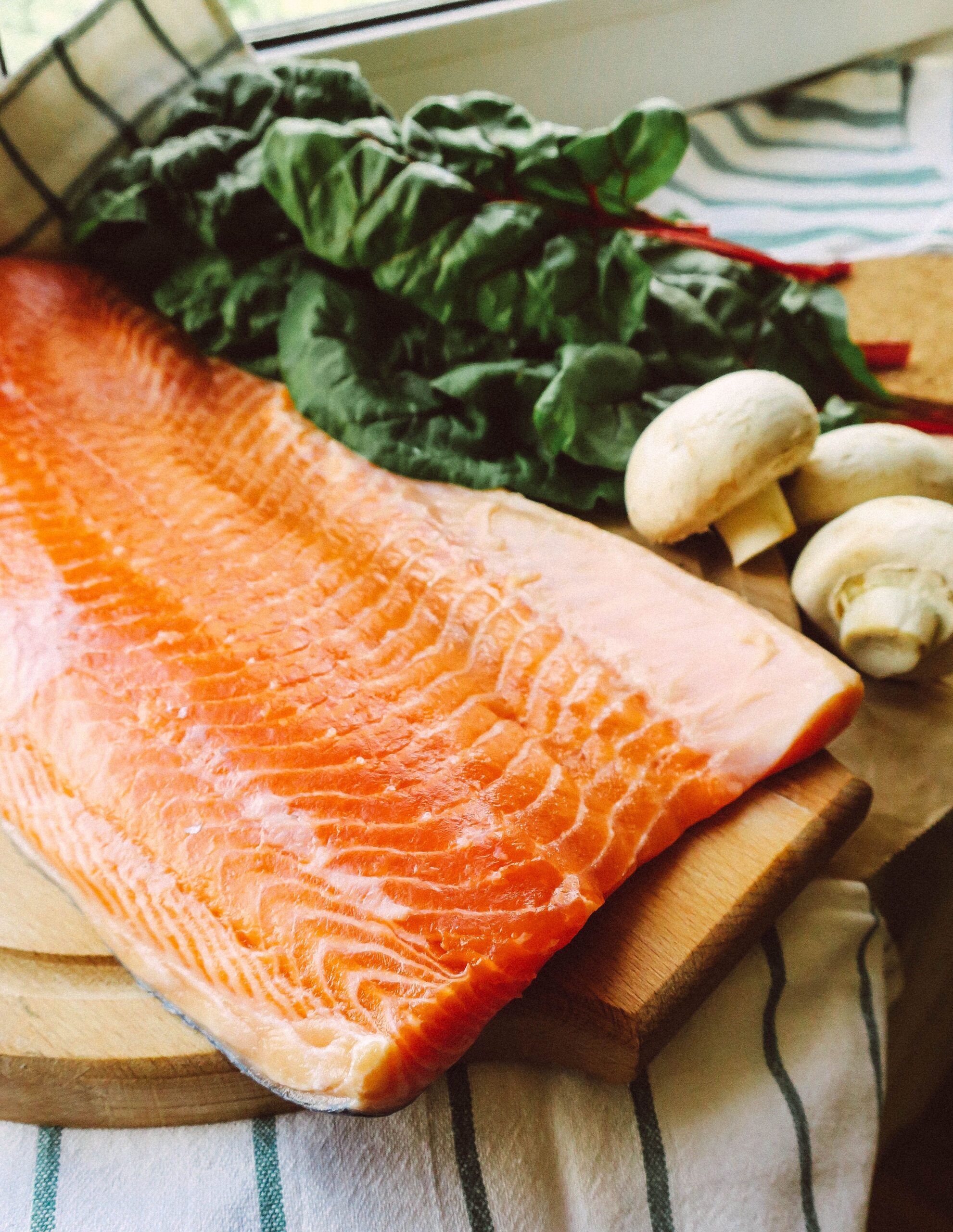
The richest natural food sources are exactly those our ancestors valued: oily fish such as salmon, mackerel and sardines, egg yolks, and liver, alongside modern fortified foods and mushrooms exposed to ultraviolet light. These belong at the centre of a food-first approach [8]. Yet the same literature is candid that, for vitamin D specifically, diet alone rarely closes the gap, particularly through a British winter or under a covered, indoor Gulf lifestyle. Food builds the foundation; it does not always complete the picture.
The calcium team: how vitamin D, magnesium and vitamin K2 work together
One of the ideas explored in real depth during my naturopathic health coaching training with CNM, taught by Dee Clough (mANP, rGNC), Naturopathy Course Director at CNM, is that vitamin D never works alone. Healthy calcium metabolism depends on a small team of nutrients acting together, and vitamin D is only the first member: its role is to increase the absorption of calcium from food in the gut.
Magnesium is the quiet enabler. It is a required cofactor for the very enzymes that convert vitamin D into its active hormonal form in the liver and kidney, which is why some studies find that vitamin D raises blood levels more reliably when magnesium status is adequate, and barely at all when it is not [20].
Vitamin K2 then decides where that calcium goes. It activates osteocalcin, which draws calcium into the bone matrix, and matrix Gla protein, which helps keep calcium out of the arteries and soft tissues, the mechanism often described as resolving the ‘calcium paradox’ [21]. Seen together the logic is elegant: vitamin D opens the door for calcium, magnesium switches vitamin D on, and vitamin K2 ensures the calcium is laid down in bone rather than in blood vessels. It is a clear illustration of why isolated high-dose supplementation can be a blunt instrument, and why naturopathic teaching emphasises nutrients in their natural, cooperative context.
When a supplement is the reasoned next step
Where sunlight and food fall short, the evidence supports supplementation, and the detail matters. Research consistently finds that vitamin D3 (cholecalciferol) raises blood levels more effectively than D2 (ergocalciferol) [19]. Beyond that, I offer the nutrient relationships above as education rather than a protocol: decisions about form, dose and any combination belong with a person’s doctor or a suitably qualified professional, and are best guided by a blood test rather than guesswork.
Testing, not guessing
The theme the evidence values most is measurement. A simple 25-hydroxyvitamin D blood test shows where a person actually stands, which matters precisely because both deficiency and excess carry risk, and because symptoms alone are unreliable [8]. For anyone who suspects a shortfall, or who falls into a higher-risk group, testing turns a guess into a decision, and keeps supplementation targeted rather than routine.
The wider lesson: old wisdom, new evidence
Set end to end, the vitamin D story is really a story about how we live. Our ancestors maintained it not through knowledge but through habit: they were outdoors, they ate the whole animal and the oily fish, they moved through the day in natural light. Industrial and then digital life quietly dismantled those foundations, and the laboratory has spent a century rediscovering, in precise molecular terms, what that older way of living delivered for free.
This is the deeper case for a naturopathic approach. It does not reject the science; it is vindicated by it. The research points back, again and again, to sunlight, whole food, movement and rest, the foundations, with testing and well-chosen supplementation as intelligent modern additions where life can no longer provide the rest. Whether a woman lives in Leeds or Abu Dhabi, her vitamin D status is shaped far more by how she lives than by the climate outside her window. That is not a counsel of despair. It is an invitation to live, a little more, the way our bodies still expect us to.
Farkhanda Jabeen is a Naturopathic Health Coach (CNM Qualified, KHDA Approved) based in Dubai and a member of the ANP. She works with women on energy, hormones and everyday wellbeing. Find her at fitnhealthylifestylecoach.com.
References
1. Vitamin D: Production, Metabolism, and Mechanism of Action. Endotext, NCBI Bookshelf. ncbi.nlm.nih.gov/books/NBK278935. View source
2. Vitamin D Metabolism, Mechanism of Action, and Clinical Applications. PMC3968073. View source
3. Jablonski NG, Chaplin G. The vitamin D-folate hypothesis as an evolutionary model for skin pigmentation. PMC5986434. View source
4. Lucock M, et al. The evolution of human skin pigmentation. American Journal of Biological Anthropology, 2023. PMC10083917. View source
5. Rajakumar K. Vitamin D, cod-liver oil, sunlight, and rickets: a historical perspective. Pediatrics, 2003. pubmed.ncbi.nlm.nih.gov/12897318. View source
6. Rickets: historical, epidemiological, pathophysiological and pathological perspectives. PMC6474539. View source
7. Theobald Palm and the recognition of the sunshine vitamin (1890). PMC3277100. View source
8. NHS. Vitamin D. nhs.uk/conditions/vitamins-and-minerals/vitamin-d. View source
9. HSIS. Vitamin D: three quarters of Britons fail to follow official winter supplement advice. hsis.org. View source
10. Vitamin D status among apparently healthy individuals in the UAE: a systematic review. Frontiers in Nutrition, 2025. frontiersin.org. View source
11. Prevalence of vitamin D deficiency, Abu Dhabi population. PMC6693241. View source
12. Vitamin D deficiency and associated factors among female migrants in the UAE. PMC8912400. View source
13. Sun-D Trial: daily sunscreen and vitamin D, a randomised controlled trial. British Journal of Dermatology, 2025. academic.oup.com/bjd. View source
14. Sunscreen and 25-hydroxyvitamin D levels: a systematic review and meta-analysis, 2025. sciencedirect.com. View source
15. Martineau AR, et al. Vitamin D supplementation to prevent acute respiratory infections: individual participant data meta-analysis. BMJ, 2017. PMC5310969. View source
16. Manson JE, et al. Vitamin D supplements and prevention of cancer and cardiovascular disease (VITAL). New England Journal of Medicine, 2019. NEJMoa1809944. View source
17. SACN. Vitamin D and Health, 2016 (RNI 10 micrograms/400 IU; deficiency below 25 nmol/L). SACN report. View source
18. The naturopathic Therapeutic Order (Zeff and Snider). AANMC. aanmc.org/therapeutic-order. View source
19. Comparison of vitamin D2 and D3 in raising serum 25-hydroxyvitamin D: systematic review and meta-analysis. Advances in Nutrition. View source
20. Uwitonze AR, Razzaque MS. Role of magnesium in vitamin D activation and function. Journal of Osteopathic Medicine, 2018. pubmed.ncbi.nlm.nih.gov/29480918. View source
21. Bellone F, et al. The Dual Role of Vitamin K2 in “Bone-Vascular Crosstalk”: Opposite Effects on Bone Loss and Vascular Calcification. Nutrients, 2021. View source